Roofing Terminology You Need to Know
By Werner-Admin
Roofing Terminology 101: This Is What You Need To Know
Whether it's your first time owning a home or you're just getting around to re-roofing your family home, it's always helpful to know a little bit about roofing terminology.
Like any other industry, there's plenty of jargon and unfamiliar words in the roofing world. Most of them make plenty of sense, but there might be some terms you need more context for to know what they mean. If you plan on chatting with roofers anytime soon, here are the definitions of some of the most common roofing terminology you'll need to get by.
Roofing Terminology: 16 Helpful Terms To Know
Take a look at some of the most common roofing terms to prepare for your new roof installation.
1. Asphalt
Asphalt is the most commonly used roofing material in the US, closely seconded by metal roofs. If you're looking at a home, it's easy to determine if they have an asphalt roof - they're the ones with shingles!
2. Laminate Shingles
Laminate shingles, also known as laminated architectural or architectural shingles, are a type of asphalt shingles. They're built with a heavier base mat and multiple material layers of refined asphalt.
3. Downspout
A downspout is used to direct water away from your home's foundation. Essentially, they're large, metal pipes running from your gutters, down the side of your house, and away from the foundation. Aside from rain, these help redirect melted snow and ice water too.
4. Eaves
The eave is the lowest edge of your roof. Usually, this is the part of the roof that hangs over the side of your house. Eaves are made up of two parts: the soffit, the underside of your roof's eaves, and the fascia, the vertical facing board.
5. Fascia
Fascia is a finishing board that runs along the edge of a roof. It's usually fixed to the trusses that support the roofing system and hides them to give a more "finished" look. Your fascia is also where the gutter is attached to the roof and can function as a protective barrier between the roof and gutters.
6. Drip Edge
Drip edge is metal flashing installed at the edges of the roof that helps control the flow of water away from the fascia. It also protects the underlying roofing components. Drip edges overhang on the sides of the roof and have a small metal flange bent away from the fascia.
7. Flashing
When a roofer talks about "flashing," they're talking about the components used to seal tricky parts of the roof, like the space between your chimney and the rest of the roof or the areas around skylights. This is a key term to remember because roof flashing protects the most vulnerable parts of your roof from the elements and water damage. Old flashing is a common cause of roof leaks and can easily be fixed.
8. Step Flashing
Step flashing is a rectangular piece of flashing that's bent 90 degrees in the center. It's used for roof-to-wall flashing. With step flashing, multiple pieces of the flashing will be installed in layers with shingles to ensure that the water flows away from the wall.
9. Base Flashing
Base flashings are the portion of a flashing attached to or resting on the deck to direct water flow onto the roof covering. It consists of piles of roof membrane material used to seal a roof at the vertical plane intersections.
10. Joist
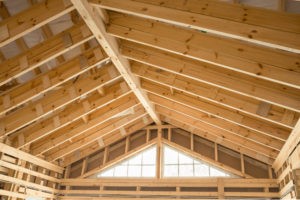
Joists, rafters, and trusses are all the main components that make up the support of your roof. If you look in your attic, joists are the large wooden beams arching up diagonally, forming large triangles at the very top of your attic. Joists, trusses, and rafters hold up the exterior components of your roof.
11. Ridge
On a roof, a ridge is any area where two faces of the roof come together. If you think of a roof as a triangle, the ridge is the very top point of the triangle, where the two sides of asphalt come together.
12. Sheathing (decking)
Sheathing (also known as roof decking) is the boards or sheets of thin wood that are nailed to the rafters of your roof. Sheathing goes on before the shingles and is the material that the shingles are secured to. Essentially, sheathing gives shingles structure so that the shingles can protect your home from the elements.
13. Square
Square refers to the amount of roofing material needed to cover 100 square feet when properly applied. Check out this page on residential roofing for an in-depth look at how squares affect the price of roof replacement.
14. Slope
Slope, or pitch, refers to how steep your roof is. The steeper your roof, the quicker it will shed flowing water and snow, but the more difficult it will be for roof contractors to work on. An example of a steep slope would be a church steeple - it doesn't get much steeper than that! A more shallow sloped roof would be something you might see on a classic ranch house.
15. Underlayment
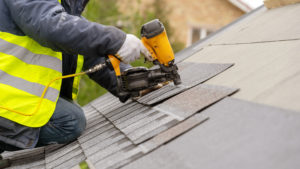
Underlayment is the second layer of protection for sheathing. For asphalt roofs, most underlayment is made of an asphalt-saturated felt - also called tar paper - and it blocks the elements from seeping into the sheathing.
16. Valley
A roof valley is the exact opposite of a ridge. Where a ridge is a high point when two asphalt sides of the roof come together, the valley would be the low point where two asphalt sides come together. For example, if your garage connects to your home in an L shape, the place where the lowest point of your home's roof meets the lowest point of the garage's roof is the valley.
We're Here For All Your Roofing Needs
Now that you're a pro with roofing terminology, it's time to replace your roof. Looking for roofing help? Werner Roofing is here for you!
We've been in the business for years and love helping homeowners determine which type of roof is best for their home. Whether you're looking for a small roof repair or you're interested in a brand new roof, you can get your free roofing estimate today!
OUR FREE ROOF INSPECTION
How do you know when it's time for a new roof? The only way to be sure of your residential roof's current condition is to have a licensed professional personally inspect it. Werner Roofing is proud to offer free roof inspections for every client, so you can be sure of your roof's condition. Every Werner Roofing inspection comes complete with our promise: "We won't recommend or sell a roof replacement unless it's necessary."